
The One Vegetable Wall Street Can't Touch

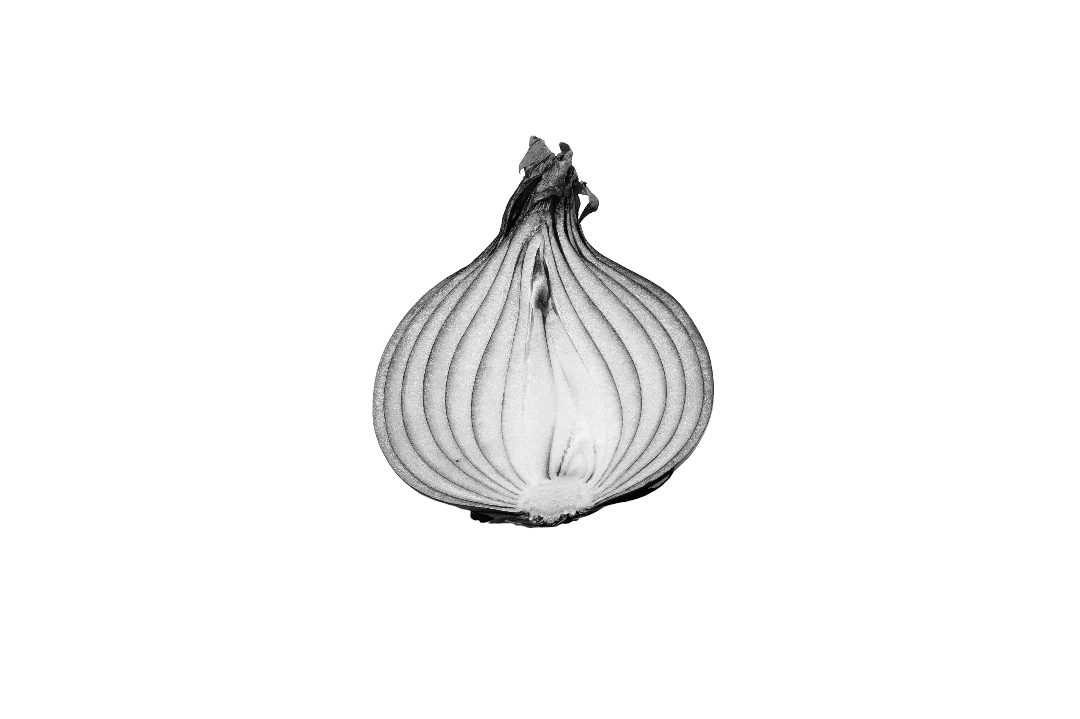
You can trade futures on frozen orange juice, feeder cattle, soybeans, rough rice, lean hogs, live cattle, lumber, coffee, sugar, platinum, ethanol, and natural gas. But there is one humble, fragrant exception.
The onion.
Sharp, tear-inducing, and somehow controversial enough to earn its own federal ban.
The only statute in U.S. derivatives law that prohibits futures trading in a specific commodity, the ban has been in place since 1958. It was written into law after a pair of Chicago traders cornered a fragile market and turned a kitchen staple into a financial weapon. The story is obscure, but it's a perfect case study in how markets, memory, and politics collide.
In the mid-1950s, two names drift through the onion market like unsaid rumours: Vincent Kosuga and Sam Siegel. At the time, onions were thinly traded, locally concentrated, and structurally fragile. A shallow market with fragmented participants is one that can be folded in half if someone presses hard enough.
And so, they pressed. Kosuga and Siegel started buying. They bought both futures contracts and the physical crop itself: railcars, storage facilities, inventory all across Chicago. By late 1955, they controlled 98% of all onions in Chicago, which totalled 13.6 million kilograms (the equivalent of 24 fully loaded Airbus A380s or roughly 90,000 blue whales).
And then, they inverted their position. The two traders quietly built mammoth short positions on onion futures while releasing their physical stockpile to flood supply. The warehouses opened and supply washed into Chicago like runoff. The price of a bag of onions dropped by 2,650%. Farmers carried the loss, and inventory was even fed to livestock because it was cheaper than bringing it to market. Contemporary accounts reported onions were selling for less than the sacks they were packed in. Kosuga and Siegel walked out the other side holding short positions, and the inevitable arithmetic settled. Those who built the corner pocketed the asymmetry; those on the other end paid for it.
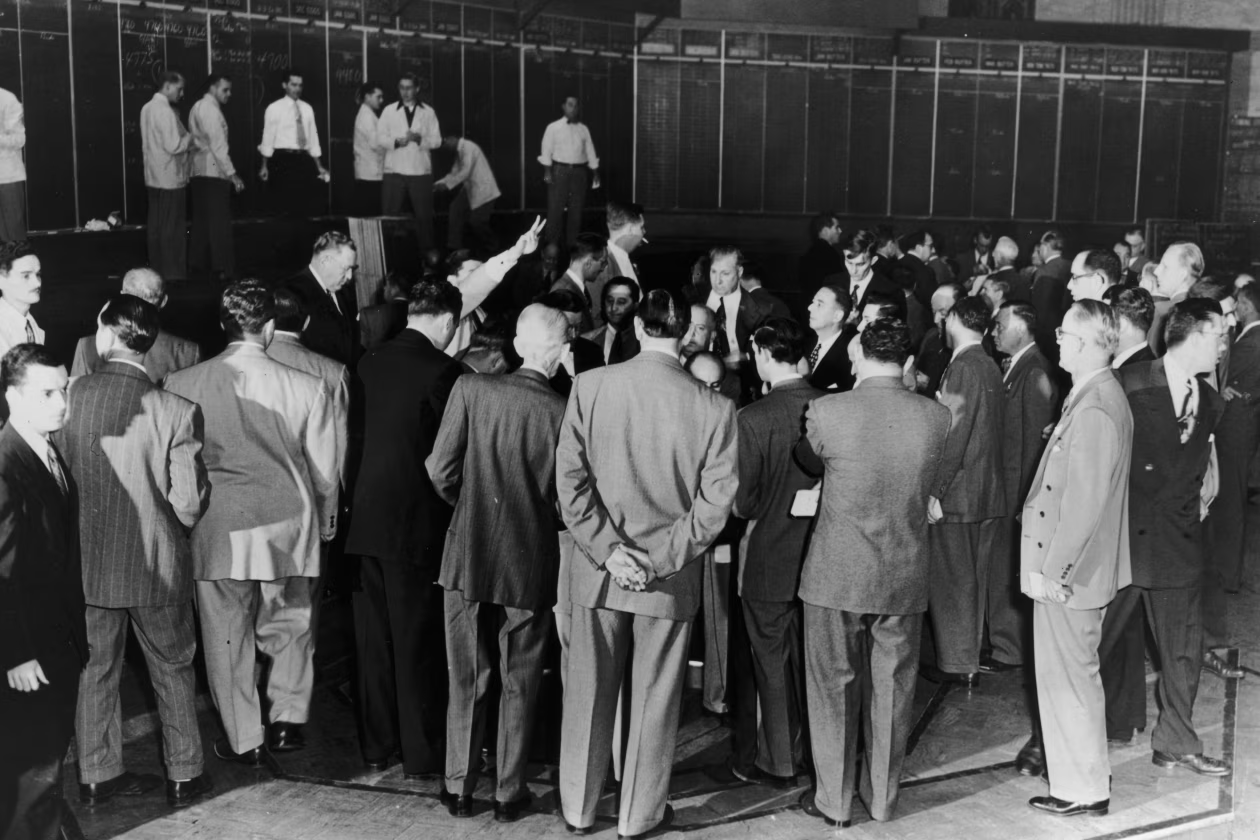
By the time the Commodity Exchange Authority figured out what was going on, Kosuga and Siegel had pocketed $8.5 million in profits. $8.5 million in 1955 (after adjusting for inflation) is just over $100 million in 2026. But to growers, the corner wasn't a clever arbitrage of structural weakness. It was a betrayal. They had watched prices disintegrate in front of them while two men walked away clean, insulated from the collapse they had engineered. Complaints turned into letters and letters into testimony. The courts heard farmers who couldn't cover costs, industry groups who wanted someone to blame, and lobbyists who understood that outrage, once focused, becomes policy.
In 1958, the Onion Futures Act became federal law, signed by President Dwight Eisenhower. But the act didn't attempt to repair the market. Rather, it erased it and outlawed the mechanism entirely. No futures contracts for onions, period. Futures on onions disappeared, Kosuga and Siegel faded, the outrage dissipated. But the law stayed.
The Onion Futures Act didn't include sunset clauses, volatility thresholds, or any condition at all under which the ban might be reconsidered. It was passed more as a conclusion, as a regulatory reflex that fossilised the anger of the moment into permanent architecture.
Fundamentally, futures exist because agricultural prices swing with weather, transport, fuel, and time. They translate risk into contracts, enable hedging, and take uncertainty off the hands of growers who can't afford to gamble their harvest. When done properly, speculation is the counterweight: liquidity, price discovery, a place to transfer risk from those who bear it to those who are willing to shoulder it.
If this mechanism is removed, the volatility doesn't vanish with it. It simply moves elsewhere. Whether that be into the margins of farmers, into the unpredictability of storage, or the inaudible cost of not being able to cleanly hedge against a spoilt crop. Studies have argued that onion prices have actually become more erratic after the ban. Without the price discovery of futures, shocks are amplified and there is no market to diffuse them. What vanished with the ban was structure. Farmers lost a hedge, merchants lost a forward market, and the industry lost the quiet discipline that futures inevitably impose on prices. Without a place for risk to be transferred, it remains embedded in the crop itself. Inevitably harder to see, and by extension, harder to manage.
But once a rule is written, undoing it requires more energy than leaving it alone. And so, the law stands, and futures have never returned - simply because the memory of their failure outlives the need to reconsider them. Forgotten, yet still there, and never quite dealt with... almost like an onion left at the back of the pantry.
